Belle and Sebastian is a band from Glasgow. Led by guitarist/vocalist Stuart Murdoch, the seven-piece band has an intimate, majestic sound that is equal parts folk-rock and ‘60s pop. Murdoch has a gift not only for whimsy and surrealism, but also for odd, unsettling lyrical detail which keeps the songs grounded in a tangible reality.
Based in Glasgow, Scotland, Belle and Sebastian released their first two albums in 1996: Tigermilk, recorded over three days, and If You’re Feeling Sinister, recorded in a week, at the peak of the chamber pop movement. At first, some critics in Britain’s music weeklies tied the band into the subgenre, yet the group was too pretty, too delicate, to bear that label.
Through their first two years of public existence, the band shielded their personalities, submitting publicity photos featuring a girl, who was a friend of the band and reluctantly posing for photo shoots. Furthermore, they performed in odd venues, playing not only the standard coffeehouses and cafes, but also homes, church halls, and libraries.
"Marx and Engels" one of my favorites is a lithe piano-led pretty-gem, the kind that made this U.K. collective cult-famous.
It's yet three more minutes of pure bliss, punctuated by a sumptuous turn on the ivories at the close. You'll never see this on an LP, but that just makes it more of must purchase
Belle & Sebastian quietly built a dedicated following after the release of their second album, If You're Feeling Sinister, as word of mouth spread from indie kids to record collectors to store clerks to critics. By the end of 1997, the Scottish septet had developed a passionate following .
If You're Feeling Sinister proved this as did the three excellent EPs that followed, increasing expectations for The Boy With the Arab Strap.
Even if the album doesn't match the peerless If You're Feeling Sinister or break new ground for Belle & Sebastian, it's not a sophomore slump. From the Motown stomp of "Dirty Dream Number Two" to the Paul Simon shuffle of the title track, there is more musical texture on Boy than Sinister, but much of this was already explored on the EPs, which means Arab Strap essentially consolidates the group's talents.
The band works together to always create music iconic to its time. With songs like Piazza, New York Catcher, Dear Catastrophe Waitress, You’re Covers Blown and Mead & Potatoes there is something for everyone. I hope that you enjoy them as much as I have!
I can’t explain why Cafe Cubana: A Flavorful Blend of Latin Sounds is so under the radar. This CD released in 1998 by Starbucks is one of the first released by the famous Coffee Company but undoubtedly one of their best. With all sorts of Latin artists from Cuba, Argentina, Cape Verde and the South of
France, it compiles some of the most iconic songs of Latin America. With its tangos, and romantic melodies this is an album to have though hard to find.
Reminiscing on Radiohead I decided to listen to what I consider one of their best albums. Using the textured sounds capes of The Bends as a launching pad, Radiohead delivered another startlingly accomplished set of modern guitar rock with OK Computer. The authentic guitar heroics present on Pablo Honey and even The Bends are nowhere to be heard here.
Radiohead has stripped away many of the obvious elements of guitar rock, creating music that is subtle and textured yet still has the feeling of rock & roll. Even at its most adventurous -- such as the complex, multi-segmented "Paranoid Android" --
the band is tight, melodic, and muscular, and Thom Yorke's voice effortlessly shifts from a sweet falsetto to vicious snarls. It's a thoroughly astonishing demonstration of musical virtuosity and becomes even more impressive with repeated listens, which reveal subtleties like electronica rhythms, eerie keyboards, odd time signatures, and complex syncopations.
Yet, all of this would simply be showmanship if the songs weren't strong in themselves, and OK Computer is filled with moody masterpieces, from the shimmering "Subterranean Homesick Alien" and the sighing "Karma Police"
to the gothic crawl of "Exit Music (For a Film)." OK Computer is the album that establishes Radiohead as one of the most inventive and rewarding guitar rock bands of the '90s.
If you’ve heard of Deodato and like his stuff but would like something a bit more hip and with a Latin mid 50’s beat you will like what I’m listening to right now and you probably don't know who these people are but, “Grupo de Experimentacion Sonora” is them.
Grupo de Experimentacion Sonora is considered today almost a myth because of low production, of which only fifteen percent or even less are left. Grupo de Experimentacion Sonora surged as a production of the The Cuban Institute of Cinematography Art & Industry ICAIC (Instituto Cubano de Arte e Industria Cinematográficos), in the beginnings of the sixties. The institute created an experimental band that surged as a collective under which to work for the creation of music for films and documentaries.With this they pretended to re-launch the perspective of all Cuban music at the time.
Directed by Leo Brower and formed by: Silvio Rodriguez, Pablo Milanes, Noel Nicola, and Sara Gonzalez intended to produce this new movement in Cuban music called the new Trove (La Nueva Trova).The Trova, is one of the grat roots of the Cuban music tree. In the 19th century there grew up in Oriente, and especially Santiago de Cuba, a group of itinerant musicians, trovadores, who moved around earning their living by singing and playing the guitar. According to one writer, to qualify as a trovador in Cuba, a person should a) sing songs of his own composition, or of others of the same kind; b) accompany himself on the guitar; and c) deal poetically with the song This definition fits best the singers of boleros, perhaps unfairly, singers who accompanied themselves on the piano.
After the Cuban Revolution of 1959, and the consequent political and social changes. It differed from the traditional trova, not because the musicians were younger, but because the content was, in the widest sense, political. Nueva trova is defined, not only by its connection with Castro's revolution, but also by its lyrics. The lyrics attempt to escape the banalities of life (e.g. love) by concentrating on socialism, injustice, sexism, colonialism, racism and similar 'serious' issues.Silvio Rodríguez and Pablo Milanés became the most important exponents of this style. Carlos Puebla and Joseíto Fernández were long-time trova singers who added their weight to the new regime, but of the two only Puebla wrote special pro-revolution songs.
The Cuban Nueva trova dates from the 1967/68, after the Cuban Revolution of 1959, and the consequent political and social changes. It differed from the traditional trova, not because the musicians were younger, but because the content was, in the widest sense, political. Nueva trova is defined, not only by its connection with Castro's revolution, but also by its lyrics. The lyrics attempt to escape the banalities of life (e.g. love) by concentrating on socialism, injustice, sexism, colonialism, racism and similar 'serious' issues.Silvio Rodríguez and Pablo Milanés became the most important exponents of this style. Carlos Puebla and Joseíto Fernández were long-time trova singers who added their weight to the new regime, but of the two only Puebla wrote special pro-revolution songs.
The regime gave plenty of support to musicians willing to write and sing anti-U.S. or pro-revolution songs; this was quite a bonus in an era when many of the traditional musicians were finding it difficult or impossible to earn a living. In 1967 the Casa de las Américas in Havana held a Festival de la canción de protesta(protest songs). Much of the effort was spent applauding causes that would annoy the U.S. government. Tania Castellanos, a filín singer and author, wrote ¡Por Angela! in support of Angela Davis. César Portillo de la Luz wrote Oh, valeroso Viet Nam.These were hot topics of the 1970s, but their topicality declined as time passed.
Nueva Trova, initially so popular, was dealt a blow by the fall of the Soviet Union, though it was already fading. It suffered inside Cuba, perhaps from a growing disenchantment with one-party rule, and externally, from the vivid contrast with the Buena Vista Social Club film and recordings. Audiences round the world have had their eyes opened to the extraordinary charm and musical quality of the older forms of Cuban music. By contrast, topical themes that seemed so relevant in the 1960s and 70s now seem dry and passé; once a theme is no longer topical, the piece rests solely on its musical quality. Those pieces of high musical and lyrical quality, amongst which Puebla's Hasta siempre stands out, will probably last as long as Cuba lasts.
Well I'm sure some of you have heard Ben Folds before, and hell you've probably even heard this album. Well that's great, and I'm there with you, he's a great artist, so I'm posting this album for those of you who are thinking "Ben who?".
This remains to this day my favorite of all Folds' releases, and it turned out to be the first record of his I listened to. It was actually my brother who bought this CD back in '05, and at the time I liked it but thought of it as an Elton John rip-off. And while there is significant musical similarities, Folds is very much his own artist. Besides being compared to Elton John is not one of the worst things that can happen!
"Songs For Silverman" is a return to form of sorts, coming on the tail of the relentlessly overproduced "Rockin' The Suburbs", and 3 EP's which were almost total misses. Musically, Silverman is his best effort since Messner, reverting back to the Ben Folds Five trio format with new bassist Jared Reynolds and drummer Lindsay Jamieson --- who also happen to sound a whole lot like Darren Jesse and Robert Sledge. While the new three-part harmonies aren’t quite as rich as the Five’s, at least they exist, and the new band's instrumentation is notably smoother and more fluid.
I know many people are reluctant to accept the new form of Ben Folds without it being followed by the Five. And while the Ben Folds Five were exceptional, and yes they did release some amazing records, one has to accept an artist for following their muse. At the time of this album he'd started to mature, what with the wife and kid, etc. and that shows in the songs content. "Gracie" for example is a heartfelt ode to his daughter.. Nothing wrong with that at all, but I know you can't always please everyone, and I'm sure the BF Five snobs spat on this album for a long while. So if you've never heard Ben Folds' work I'd recommend checking this out immediately. I don't think you can find a better entry point into his music than this album, and from here your free to look backward into his catalog, as there is a lot of fantastic work there too.
The best part of this entire download is the "vinyl only" exclusive cut, Track 12 "Bitches Ain't Shit". That's right, Ben Folds of all people covering a classic track off of Dr. Dre's "The Chronic". It's more humorous than anything, but what's most amazing is that he actually does a great job performing the song. It's just amazing to hear Ben sing lyrics like:
"Bitches ain't shit but hoes and tricks, Lick on deez nutz and suck the dick, Get's the fuck out after you're done, And I hops in my ride to make a quick run..."
01. Bastard (5:23) 02. You To Thank (3:36) 03. Jesusland (4:31) 04. Landed (4:29) 05. Gracie (2:40) 06. Trusted (4:09) 07. Give Judy My Notice (3:37) 08. Late (3:58) 09. Sentimental Guy (3:04) 10. Time (4:30) 11. Prison Food (4:15) 12. Bitches Ain't Shit (3:55) *vinyl exclusive track.
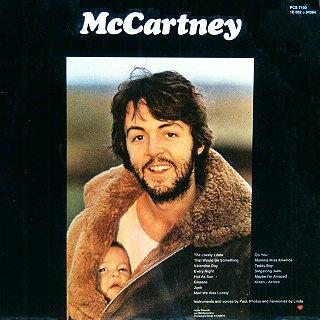
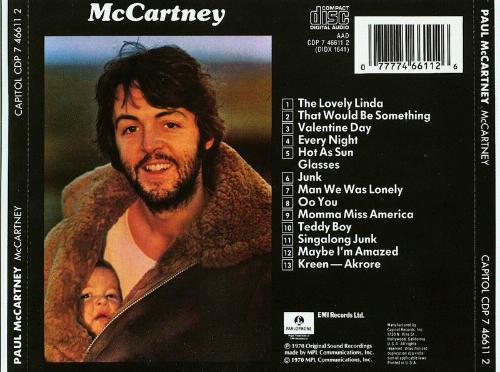
Possibly Paul’s greatest album, and his first solo , was released in 1970. It is notable for the fact that McCartney, a multi instrumentalist, performed the entire album (all instruments and voices) by himself, except for some backing vocals from his first wife, Linda McCartney. McCartney stated that he played "bass, drums, acoustic guitar, lead guitar, piano, Mellotron, organ, toy xylophone, and bow and arrow" on the album. Notable, also, is the use of a large number of instrumental tracks.
Paul's solo album, simply entitled McCartney, doesn't please the critics because of its simplicity and its under-production. Anyway the album reaches #2 in the charts, right behind Bridge Over Trouble Water by Simon and Garfunkel. And even more, Paul McCartney will soon been awarded with a Golden Record for his solo work.
This first solo album will stay among the favorite ones for many Paul's fans despite the simplicity of the production.
The album starts with The Lovely Linda, which is a short song that was used by Paul to test his four tracks studio.
Then follows That Would Be Something, a nice acoustic ballad backed up by an electric guitar and by some percussions. It really has a countryish style in it. This song will be covered again by Paul 21 years later for the MTV Unplugged program in January 1991. This live cover will be included on Paul's Unplugged album.
Next comes Valentine Day, an instrumental title mostly based on Paul's electric guitar solo. A skilful rendering.
The fourth track is a nice acoustic ballad entitled Every Night.
PAUL McCartney - EVERY NIGHT 1970
It's one of the bests songs on this album. Paul will cover this title many times during his solo career, especially during the 1979' Wings Tour (a live recording can be found on the Concert For The People Of Kampuchea album). It will also be performed as part of the MTV Unplugged program in January 1991.
McCartney album: it's called Hot As Sun and was written by Paul in 1959. At the end of this song, there is some musical link called Glasses which lasts a few seconds and features an excerpt of Suicide, an unreleased song by Paul. Even today the complete Suicide recording can only be found on some bootleg albums.
Then follow Junk which was written by Paul in 1968 during the Indian stay with the Beatles in Maharishi's home in Rishikesn. This is a simple and melancholic ballad played on the acoustic guitar.
Man We Was Lonely is the next track and it brings us some joyful atmosphere. It is a special track as it is the first song ever written together by Paul and Linda.
Oo You comes then as a strong rock song with straight electric guitar lines in the background. It's followed by an instrumental composition, Momma Miss America, in which Paul can exhibit all his skill in playing various instruments and particularly the drums. A good electric guitar solo dominates the second half of the song.
Another nice acoustic ballad follows with Teddy Boy which was rejected from the Beatles' Let It Be album. Like Junk, it was written by Paul in 1968 during the Indian stay with the Beatles in Maharishi's home in Rishikesn.
The next song, Singalong Junk, is an instrumental variation on the theme of the previous Junk composition. It features a beautiful orchestration on piano and acoustic guitar. A newer cover of this instrumental song can be found on Paul's Unplugged album that was recorded during the MTV Unplugged program in 1991.
But the strongest title on this album is definitely Maybe I'm Amazed, a wonderful ballad played on piano and enhanced by an unforgettable electric guitar solo. This tremendous song will remain one the most famous masterpieces composed by Paul.
It will be covered many times by Wings on stage and more recently by Paul and his band during the 89/90' World Tour. Some of these astounding recordings can be found on Wings Over America and on Tripping The Live Fantastic.
Amazingly, no single will be released from the McCartney album. Clearly Maybe I'm Amazed should have been this missing single. This unfairness will be repaired in April 1977 with the release of the single Maybe I'm Amazed / Soily taken from Wings Over America.
The last title of the McCartney album, Kreen-Akrore is an instrumental and experimental composition with some unusual percussion rhythms and a more classical electric guitar line to end the track.
By far one of the best albums he has ever made and a personal favorite, give it a chance and listen. Link to download will be posted in comments.
An old music-press adage claims that second albums are notoriously "difficult." If this were true, then Every Day should be one big disappointment. The fact that it's arguably one of 2002's finest jazz albums ( yes, jazz--as in real, old-fashioned, clarinets-and-trumpets jazz ) proves how talented Jason Swinscoe's Cinematic Orchestra are. Following up their impeccable debut, Motion, was going to be tough, but they've surpassed themselves here. While the former was a fusion of sample-culture smoky, backroom jazz, Every Day is jazz pure and simple--old jazz for the nu-jazz generation. "Man with the Movie Camera," "Burnout," and "Flite" are near-perfect soundtrack jazz pieces: epic, shuffling, ever shifting. "All That You Give" and "Evolution" highlight the enchanting vocals of legendary soul singer Fontella Bass. Best of all, though, is the Roots Manuva collaboration "All Things to All Men"--proof that jazz and rap aren't as strange bedfellows as some may think.
With Every Day, Cinematic Orchestra move beyond the electro-jazz fusion of their debut to make a record more natural, more paced, and, surprisingly, better than the justly hyped Motion. J Swinscoe is more the arranger/conductor here than the producer, but of course, there's little need for samples or effects with such an accomplished band sharing the burden. For the opener "All That You Give," Swinscoe and Co., plus harp player Rhodri Davies, spend a few minutes delicately paving the way for a deeply felt vocal by soul hero Fontella Bass. "Burn Out" is a lush, meditative track with a pleasantly ambling solo from Phil France on electric piano, a few appropriately cinematic-sounding horns, an age-old vocal sample, and occasional creaking static phasing through. Bass returns for another splendid track ( "Evolution" ), and the mighty Roots Manuva appears on a magisterial, spoken-word quasi-autobiography, "All Things to All Men." Except for a pair of detours into highly programmed "broken beat" production, Every Day is a textured, acoustic work; Cinematic Orchestra take their time setting up these songs -- of the seven tracks, four last over nine minutes. The sounds and styles heard may not be revolutionary, but instead of simply pushing stylistic boundaries, Cinematic Orchestra display a real gift in making emotional, artistic music.
Personnel: Jason Swincoe (Arranger and Sampling) Patrick Carpenter (Turntables and Electronics) Milo Fell (Percussion) Luke Flowers (Drums) Phil France (Double Bass, Bass Guitar and Electric Piano) John Ellis (Keyboards) Roots Manuva (Spoken Words) - 6 Fontella Bass (Vocals) - 1,4
In case any of you guys don'twatch TV here is a treat.
Lets backtrack to 2006. GEICO was comming out with its catchy new star, The Caveman, well listen to this commercial titled "At The Air Port":
You are listening to Remind Me by Röyksopp released as their fourth single.
Melody A.M. is the debut album of Norwegian duo Röyksopp. Songs from this album have been used in television adverts and computer games"Eple" was licensed by Apple and used as the introduction music for the Mac OS X v10.3Setup Assistant A remix of "Poor Leno" was featured in the SSX 3 soundtrack.
So if your interested listen and if you like it buy it.
For testing purposes the following link will take you to it.
Enjoy
Sunday, June 14, 2009
Zero 7 - Simple Things [2001]
Country: UK
Genre: Downtempo, Future Jazz, Trip Hop
It's a soulful mix of soul, jazz and electro. The vocals are great (although personally I'm not particularly fond of Sia Furler at certain moments) and the arrangements are right on the money for this type of "retro-techno" sound. I sometimes get confused if it's a smooth jazz combo trying to be electronic or an electronic group trying to be smooth jazz.In The Waiting Line and I Have Seen are the best ones I suggest you begin with those.
Song List :
1 I Have Seen (5:07) Vocals - Mozez
2 Polaris (4:48) 3 Destiny (5:37) Vocals - Sia Furler* , Sophie Barker 4 Give It Away (5:17) 5 Simple Things (4:24) Vocals - Mozez 6 Red Dust (5:40) 7 Distractions (5:16) Vocals - Sia Furler* 8 In The Waiting Line (4:32) Vocals - Sophie Barker 9 Out Of Town (4:47) 10 This World (5:35) Vocals - Mozez 11 Likufanele (6:11) 12 End Theme (3:39) 13 Salt Water Sound (5:30) 14 Spinning (6:03) Vocals - Sophie Barker Download
Collapse Under The Empire - Systembreakdown
[2009] Systembreakdown
Country: Germany Genre: Post-Rock/Instrumental
Collapse Under The Empire is an instrumental/post-rock band from Hamburg/Germany. They formed 2007 and released their debut album „Systembreakdown“ (2009) on their own.
Most of the songs are alternating between electro-bleeps and powerful guitar explosions combining epic guitars with chilled electronic elements. In one year’s time they have self-released their debut LP “Systembreakdown”, using pianos and synths with guitar-battering crescendos. “Systembreakdown” may only be about 40 minutes long with no nine-minute epic, but it packs a lot of beauty and emotion.Nevertheless Collapse Under The Empire stick to their own style and do not want to emerge as a knock-off. With their mixture of instrumental post-rock they are trying to make a cut above the uniform pulp and put their own stamp on it.
Tracklist: 01 Monumental Sequence 02 Sky Falling 03 Innocence 04 The Taste Of Last Summer 05 Quiet Dimension 06 Environmental Obsession 07 Turn 08 Depending On You 09 Further Than The End Of The World 10 Buried In Pieces
What an artist is
-
"An artist is a creature driven by demons. He doesn't know why they choose
him and he's usually too busy to wonder why."
William Faulkner
[Video] Yeasayer: "Madder Red"
-
Before I get back to the grind of getting my Lollapalooza coverage up,
*Yeasayer* have been stringing me along via Twitter about a new video
they've been p...