Search This Blog

Sunday, December 27, 2009

Starbucks news! All the coffee in China

All the coffee in China


By Michele Scrimenti and Cong Mu


Starbucks is taking another major step forward in its march to dominate the Chinese coffee market by stepping up coffee bean cultivation efforts in Yunnan Province.

The American coffee company plans on enlarging its bean cultivating operations in Baoshan, Yunnan Province in 2010 in order to supply its nearly 700 stores in China, the company said Thursday.

"Ultimately I'd love to see our coffee from China feature on the shelves of every one of our stores in 49 countries around the world," Martin Coles, president of Starbucks International, said in January when the company launched its Yunnan-grown "South of the Clouds" bean line.

The company spent almost three years conducting investigations and tests on the Yunnan beans before it decided to make them available for their stores.

The beans will be grown in Yunnan and then shipped to America or the Netherlands to be roasted before being shipped back to China. The company said that it has no plans to set up a bean roasting facility anytime in the near future.

China has become a more important market for Starbucks over recent years, and the company's domestic profits doubled in 2009 over the previous fiscal year, and the coffee giant expects that the country could support as many as 10,000 stores, equal to the number currently operating in the US.


Problems in Shangri-la

Baoshan is located in a remote part of China's Southwest also known as Shangri-la, surrounded by mountains and the Salween and Mekong Rivers.

Patrick Chovanec, a professor at Tsinghua University's School of Economics and Management, wrote on his blog after the announcement that "[t]he challenge facing Shangri-La, as always, is transportation."

However, Starbucks said that the region is seeing large trade infrastructure development due to its proximity to Myanmar and Vietnam and already boasts an airport capable of supporting airplanes as large as Boeing 737s.

Not everyone is positive on Starbucks' growth prospects in China.

When Wang Jinlong, the company's head for the Greater China region, said that China will be Starbucks' number two market after the United States, critics balked at the proposition.

Daniel Gross wrote in Slate magazine that Starbucks has struggled to "foist American-style consumerism on to China's rising masses" who have "no coffee culture to speak of."

But Gross' critics seem to be ignoring one of the key factors to Starbucks' success so far in the Middle Kingdom: it's not about the coffee.

When the company opened its first shop in China in 1999, it focused on making itself more than a place to buy coffee and rather built spacious cafes where people could stay for long periods of time.

From the beginning CEO Howard Schultz has promoted "the idea of Starbucks becoming the third place between home and work in [Asian] countries."

According to the company's research, 90 percent of people who order food or beverages stay on the premises to consume them. Only 20 percent of Americans going to Starbucks do the same. And drinking coffee is not even one of the top five reasons why Chinese go to Starbucks (It's No. 6). After surveying customers, Starbucks China discovered that the main reason people go to their shops is to have a place to hang out.


And Kristin Graham, former financial analyst for The Motley Fool, also opined the company would have trouble expanding in China due to the fact "that Starbucks in China may be a daily ritual for expats, but not locals."

This has remained a common misperception among people looking at the company, even experts who, like Graham, are based in China.

Research from the University of Florida showed that locals had already eclipsed foreigners in Shanghai Starbucks four years ago. Non-Chinese only accounted for around 40 percent of total customers in several branches located in areas of Shanghai with heavy concentrations of expats.

Li Jing, a communications manager with Starbucks Corporation in Shanghai, confirmed the University of Florida's findings, saying that expats were the company's mainstay when branches first opened up, but locals now make up the majority of their customers around the country.

She declined to give exact figures but was confident that the proportion of Chinese going to Starbucks would continue to grow.

Tea country

Graham's and Gross's criticisms are nothing new for Starbucks in China.

When the company first declared it would move into the market, analysts were skeptical that Chinese, steeped in millennia of tea culture, would be unlikely to embrace coffee.


After several years of testing and market research, Starbucks came out with a multi-pronged attack that built on Schultz's idea of creating "third places" that would give Chinese consumers a spot to relax and meet up with friends away from home and work.

Thanks to its real estate know-how and analyses of pedestrian traffic flows, Starbucks has been able to open up branches in the best locations where its most likely customers live and work.

And Starbucks in China has also benefited from the burgeoning Chinese middle class' propensity towards conspicuous consumption. To many Chinese, Starbucks appears as a somewhat upscale coffee chain where well-off hipsters go to hang out.

"To be perfectly honest," said Zhang Liang, a frequent Starbucks-goer in Beijing, "I like to go to Starbucks simply because it's a cool place to be. I'm not actually a huge fan of the coffee."

As long as Starbucks can continue to bring in people like Zhang, its China gamble most likely will pay off no matter where the beans are coming from.

Source: http://news.alibaba.com/article/detail/business-in-china/100216209-1-all-coffee-china.html

Saturday, December 19, 2009

Amazing!!!


Der Mensch als Industriepalast [Man as Industrial Palace] from Henning Lederer on Vimeo.

Thursday, December 17, 2009

Collage: Bell & Sebastian

Belle and Sebastian Belle and Sebastian is a band from Glasgow. Led by guitarist/vocalist Stuart Murdoch, the seven-piece band has an intimate, majestic sound that is equal parts folk-rock and ‘60s pop. Murdoch has a gift not only for whimsy and surrealism, but also for odd, unsettling lyrical detail which keeps the songs grounded in a tangible reality.

Based in Glasgow, Scotland, Belle and Sebastian released their first two albums in 1996: Tigermilk, recorded over three days, and If You’re Feeling Sinister, recorded in a week, at the peak of the chamber pop movement. At first, some critics in Britain’s music weeklies tied the band into the subgenre, yet the group was too pretty, too delicate, to bear that label. 
belleandsebastian_brm_052109Through their first two years of public existence, the band shielded their personalities, submitting publicity photos featuring a girl, who was a friend of the band and reluctantly posing for photo shoots. Furthermore, they performed in odd venues, playing not only the standard coffeehouses and cafes, but also homes, church halls, and libraries.

"Marx and Engels" one of my favorites is a lithe piano-led pretty-gem, the kind that made this U.K. collective cult-famous.

It's yet three more minutes of pure bliss, punctuated by a sumptuous turn on the ivories at the close. You'll never see this on an LP, but that just makes it more of must purchase
Belle & Sebastian quietly built a dedicated following after the release of their second album, If You're Feeling Sinister, as word of mouth spread from indie kids to record collectors to store clerks to critics. By the end of 1997, the Scottish septet had developed a passionate following .


If You're Feeling Sinister proved this as did the three excellent EPs that followed, increasing expectations for The Boy With the Arab Strap.

Even if the album doesn't match the peerless If You're Feeling Sinister or break new ground for Belle & Sebastian, it's not a sophomore slump. From the Motown stomp of "Dirty Dream Number Two" to the Paul Simon shuffle of the title track, there is more musical texture on Boy than Sinister, but much of this was already explored on the EPs, which means Arab Strap essentially consolidates the group's talents.


The band works together to always create music iconic to its time. With songs like Piazza, New York Catcher, Dear Catastrophe Waitress, You’re Covers Blown and Mead & Potatoes there is something for everyone. I hope that you enjoy them as much as I have!
DOWNLOAD:
http://rapidshare.com/files/322385909/Belle_Sebastian.rar

Tuesday, December 8, 2009

I'll Be Back

I know, I know it's been to long and to be honest I have completely disregarded you guys. For my personal friends out there, you know how lazy I can be sometimes and as this has been my first time as a full-time student, well it's gotten hectic.

Anyways, I will begin writing again at the end of the week and there's a lot going on. With Obama's decision to send 30,000 troops into the middle east and political unrest kinda settling down in Honduras and other Latin-American countries well its enough to keep me writing for a while.

Also, as a result of much advice especially Cedric Craig, I will be taking my first photography course. I dont want to say I'm some sort of pro, but I hope this shows me something I don't already know and if not I'll just take a more advanced one during the fall.

Some cool music and free downloads are coming to you this month. I've been exploring some pretty cool alternative Latin bands especially rock and Nicaraguan music. As always suggestions are welcome.

The first thing that will get done is that I'm gonna finish revamping the web site into something that will allow me some more customization and options to the traditional layout while remaining sleek and simple.

By the way I've begun to create some artwork that I'll be displaying to you guys when I'm done. Exciting!

So hold on, I'll be back within the week. Love.

Silvio.

Sunday, October 4, 2009

Under Construction

People, I am remodeling the site per say an the blog layout will not look to good but do not despair it'll be done soon!

Thursday, October 1, 2009

Cafe Cubana: A Flavorful Blend of Latin Sounds (1998)

51YpyEb3cgL._SS500_

I can’t explain why Cafe Cubana: A Flavorful Blend of Latin Sounds is so under the radar. This CD released in 1998 by Starbucks is one of the first released by the famous Coffee Company but undoubtedly one of their best. With all sorts of Latin artists from  Cuba, Argentina, Cape Verde and the South of

France, it compiles some of the most iconic songs of Latin America. With its tangos, and romantic melodies  this is an album to have though hard to find.

Wednesday, September 30, 2009

Radiohead – OK Computer (1997)

radiohead-ok-computer Reminiscing on Radiohead I decided to listen to what I consider one of their best albums. Using the textured sounds capes of The Bends as a launching pad, Radiohead delivered another startlingly accomplished set of modern guitar rock with OK Computer. The authentic guitar heroics present on Pablo Honey and even The Bends are nowhere to be heard here.

Radiohead has stripped away many of the obvious elements of guitar rock, creating music that is subtle and textured yet still has the feeling of rock & roll. Even at its most adventurous -- such as the complex, multi-segmented "Paranoid Android" --

the band is tight, melodic, and muscular, and Thom Yorke's voice effortlessly shifts from a sweet falsetto to vicious snarls. It's a thoroughly astonishing demonstration of musical virtuosity and becomes even more impressive with repeated listens, which reveal subtleties like electronica rhythms, eerie keyboards, odd time signatures, and complex syncopations.

Yet, all of this would simply be showmanship if the songs weren't strong in themselves, and OK Computer is filled with moody masterpieces, from the shimmering "Subterranean Homesick Alien" and the sighing "Karma Police"

to the gothic crawl of "Exit Music (For a Film)." OK Computer is the album that establishes Radiohead as one of the most inventive and rewarding guitar rock bands of the '90s.

Radiohead-Ok-Computer-In01


DOWNLOAD:
http://rapidshare.com/files/287161166/OK_Computer.rar

Tuesday, September 29, 2009

Beautiful Cuba – Cuba Bella

cuba

Sunday, September 27, 2009

The Cuban Revolution and Music: Grupo de Experimentacion Sonora.

image If you’ve heard of Deodato and like his stuff but would like something a bit more hip and with a Latin mid 50’s beat you will like what I’m listening to right now and you probably don't know who these people are but, “Grupo de Experimentacion Sonora” is them.

Grupo de Experimentacion Sonora is considered today almost a myth because of low production, of which only fifteen percent or even less are left. Grupo de Experimentacion Sonora surged as a production of the The Cuban Institute of Cinematography Art & Industry ICAIC (Instituto Cubano de Arte e Industria Cinematográficos), in the beginnings of the sixties. TheGrupo de Experimentacin Sonora del ICAIC GESI institute created an experimental band that surged as a collective under which to work for the creation of music for films and documentaries.With this they pretended to re-launch the perspective of all Cuban music at the time.

LEO_BROUWER01Directed by Leo Brower and formed by: Silvio Rodriguez, Pablo Milanes, Noel Nicola, and Sara Gonzalez intended to produce this new movement in Cuban music called the new Trove (La Nueva Trova).The Trova, is one of the grat roots of the Cuban music tree. In the 19th century there grew up in Oriente, and especially Santiago de Cuba, a group of itinerant musicians, trovadores, who moved around earning their living by singing and playing the guitar. According to one writer, to qualify as a trovador in Cuba, a person should a) sing songs of his own composition, or of others of the same kind; b) accompany himself on the guitar; and c) deal poetically with the song This definition fits best the singers of boleros, perhaps unfairly, singers who accompanied themselves on the piano.

After the Cuban Revolution of 1959, and the consequent political and social changes. It differed from the traditional trova, not because the musicians were younger, but because the content was, in the widest sense, political. Nueva trova is defined, not only by its connection with Castro's revolution, but also by its lyrics. The lyrics attempt to escape the banalities of life (e.g. love) by concentrating on socialism, injustice, sexism, colonialism, racism and similar 'serious' issues. Silvio Rodríguez and Pablo Milanés became the most important exponents of this style. Carlos Puebla and Joseíto Fernández were long-time trova singers who added their weight to the new regime, but of the two only Puebla wrote special pro-revolution songs.ges005-c

The Cuban Nueva trova dates from the 1967/68, after the Cuban Revolution of 1959, and the consequent political and social changes. It differed from the traditional trova, not because the musicians were younger, but because the content was, in the widest sense, political. Nueva trova is defined, not only by its connection with Castro's revolution, but also by its lyrics. The lyrics attempt to escape the banalities of life (e.g. love) by concentrating on socialism, injustice, sexism, colonialism, racism and similar 'serious' issues. Silvio Rodríguez and Pablo Milanés became the most important exponents of this style. Carlos Puebla and Joseíto Fernández were long-time trova singers who added their weight to the new regime, but of the two only Puebla wrote special pro-revolution songs.

The regime gave plenty of support to musicians willing to write and sing anti-U.S. or pro-revolution songs; this was quite a bonus in an era when many of the traditional musicians were finding it difficult or impossible to earn a living. In 1967 the Casa de las Américas in Havana held a Festival de la canción de protesta(protest songs). Much of the effort was spent applauding causes that would annoy the U.S. government. Tania Castellanos, a filín singer and author, wrote ¡Por Angela! in support of Angela Davis. César Portillo de la Luz wrote Oh, valeroso Viet Nam. These were hot topics of the 1970s, but their topicality declined as time passed._pablo_milanes2

Nueva Trova, initially so popular, was dealt a blow by the fall of the Soviet Union, though it was already fading. It suffered inside Cuba, perhaps from a growing disenchantment with one-party rule, and externally, from the vivid contrast with the Buena Vista Social Club film and recordings. Audiences round the world have had their eyes opened to the extraordinary charm and musical quality of the older forms of Cuban music. By contrast, topical themes that seemed so relevant in the 1960s and 70s now seem dry and passé; once a theme is no longer topical, the piece rests solely on its musical quality. Those pieces of high musical and lyrical quality, amongst which Puebla's Hasta siempre stands out, will probably last as long as Cuba lasts.

Here you go album 1 of 4

http://rapidshare.com/files/286032046/G.E.S.I._vol._1.rar

Sunday, August 23, 2009

Sick Around America. Britain and the NHS


10 minte clip about the U.K's 60-year-old health care system. The Wall Street Journal reported this week that critics of Obama's health proposuals who say he wants to nationalize America's system point to the alleged pitfalls and failures with Britain's "socialized medicine."

That's sent Britain's politicians and citizens into a tizzy -- sample the Twitter campaign.

This video is from Sick Around the World, with Washington Post foreign correspondent T.R. Reid.

Here's a synopsis of the full program (which you can watch online) and a short summary of how things work in the government-run NHS.

AIR – Pocket Symphony (2007)


The French duo's fourth album, Pocket Symphony, is another creative masterpiece of unconventional style and sound.

air_pocket_symphony

More apt to cite stately rock paragons Burt Bacharach and Brian Wilson as their inspirations than Derrick May or Aphex Twin, the French duo Air gained inclusion into the late-'90s electronica surge due chiefly to the labels their recordings appeared on, not the actual music they produced. Their sound, a variant of the classic disco sound coaxed into a relaxing Prozac vision of the late '70s, looked back to a variety of phenomena from the period -- synthesizer maestros Tomita, Jean-Michel Jarre, and Vangelis, new wave music of the nonspiky variety, and obscure Italian film soundtracks. Despite gaining quick entrance into the dance community (through releases for Source and Mo' Wax), Air's 1998 debut album, Moon Safari, charted a light……..

…..well, airy, course along soundscapes composed with melody lines by Moog and Rhodes, not Roland and Yamaha. The presence of several female vocalists, an equipment list whose number of pieces stretched into the dozens, and a baroque tuba solo on one track -- all of this conspired to make Air more of a happening in the living room than the dancefloor.

Ever since Moon Safari was hailed as an instant classic, Air have swung back and forth between the experimental and accessible sides.

On Pocket Symphony, Dunckel and Godin find a balance between pretty and inventive that they haven't struck since, well, Moon Safari, even though it isn't nearly as immediate -- even by Air's standards, this is an extremely introspective and atmospheric album. It's beyond clichéd to call the duo's music filmic; nevertheless, "Space Maker",


and "Night Sight"

play like the album's opening titles and ending credits, bracketing a set of songs that are sadder and wiser than anything Air has done since The Virgin Suicides (particularly "Lost Message," which could have easily appeared on that soundtrack).

These songs are often unsettling, but gently so, like dreams that are still vivid but hard to explain upon waking.

Pocket Symphony pairs Air with producer Nigel Godrich, which is an inspired choice -- not just because Godrich has a similarly atmospheric touch and adds lots of fascinating sonic details, but because he helps Air keep the album intimate, not polished into a state of distant perfection. "Left Bank," which blends humming with a cello and captures Godin's acoustic guitar so clearly it sounds like he's strumming it behind you, is a gorgeous example  of how well this collaboration works. The Japanese influence on Talkie Walkie and Air's imagemusic for Lost in Translation is deepened on Pocket Symphony, with shamisen and koto (which Godin spent a year learning to play) adding to its ethereal beauty, particularly on "Mer du Japon." Musically and thematically, this is some of Air's most elegant, mature music; it does what it does so compellingly that any attempts to be "poppy" would miss the point.

Download here:

http://rapidshare.com/files/163075042/A1r.P0ck3t.Symph0ny.rar

Thursday, August 13, 2009

MGMT "Time to Pretend"

Psychedelic pop rarely seems to live in the real world, and that’s often part of its appeal. But “Time to Pretend” seems determined to turn this notion on its head, with cynical lyrics such as “Let’s make some music, make some money, find some models for wives” set to a soundtrack of steady drum beats, synths, and trippy vocals. MGMT is touring with Of Montreal, and of course will be opening for them when they come to Oberlin. They’re based out of Brooklyn, and I think this could be the beginning of the end of my Canadian obsession…but we’ll see. I'm having a hard time pinning down when their debut album, Oracular Spectacular, can be bought / will be released (supposedly this month?), but I'm working on it. (Update: it was released on October 2nd, and you can get it on iTunes.)

What else can we do?
get jobs in offices
and wake up for the morning commute.
Forget about our mothers and our friends,
We’re fated to pretend.

Sample: http://kate.oberlist.com/MGMT%20-%20Time%20to%20Pretend.mp3

Tuesday, August 11, 2009

Ben Folds – Songs For Silverland (2005)

[1115155939.jpg]

Well I'm sure some of you have heard Ben Folds before, and hell you've probably even heard this album. Well that's great, and I'm there with you, he's a great artist, so I'm posting this album for those of you who are thinking "Ben who?".


This remains to this day my favorite of all Folds' releases, and it turned out to be the first record of his I listened to. It was actually my brother who bought this CD back in '05, and at the time I liked it but thought of it as an Elton John rip-off. And while there is significant musical similarities, Folds is very much his own artist. Besides being compared to Elton John is not one of the worst things that can happen!


"Songs For Silverman" is a return to form of sorts, coming on the tail of the relentlessly overproduced "Rockin' The Suburbs", and 3 EP's which were almost total misses. Musically, Silverman is his best effort since Messner, reverting back to the Ben Folds Five trio format with new bassist Jared Reynolds and drummer Lindsay Jamieson --- who also happen to sound a whole lot like Darren Jesse and Robert Sledge. While the new three-part harmonies aren’t quite as rich as the Five’s, at least they exist, and the new band's instrumentation is notably smoother and more fluid.


I know many people are reluctant to accept the new form of Ben Folds without it being followed by the Five. And while the Ben Folds Five were exceptional, and yes they did release some amazing records, one has to accept an artist for following their muse. At the time of this album he'd started to mature, what with the wife and kid, etc. and that shows in the songs content. "Gracie" for example is a heartfelt ode to his daughter.. Nothing wrong with that at all, but I know you can't always please everyone, and I'm sure the BF Five snobs spat on this album for a long while.
So if you've never heard Ben Folds' work I'd recommend checking this out immediately. I don't think you can find a better entry point into his music than this album, and from here your free to look backward into his catalog, as there is a lot of fantastic work there too.


The best part of this entire download is the "vinyl only" exclusive cut, Track 12 "Bitches Ain't Shit". That's right, Ben Folds of all people covering a classic track off of Dr. Dre's "The Chronic". It's more humorous than anything, but what's most amazing is that he actually does a great job performing the song.
It's just amazing to hear Ben sing lyrics like:

"Bitches ain't shit but hoes and tricks, Lick on deez nutz and suck the dick, Get's the fuck out after you're done, And I hops in my ride to make a quick run..."

01. Bastard (5:23)
02. You To Thank (3:36)
03. Jesusland (4:31)
04. Landed (4:29)
05. Gracie (2:40)
06. Trusted (4:09)
07. Give Judy My Notice (3:37)
08. Late (3:58)
09. Sentimental Guy (3:04)
10. Time (4:30)
11. Prison Food (4:15)
12. Bitches Ain't Shit (3:55) *vinyl exclusive track.


Download "Songs For Silverman" (2005) @ Sharebee

Wednesday, July 22, 2009

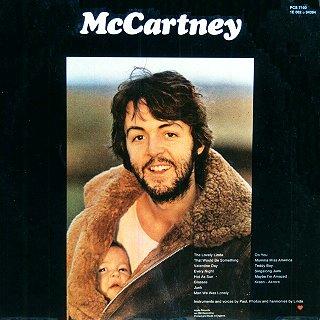
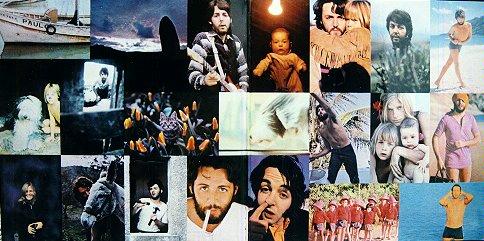
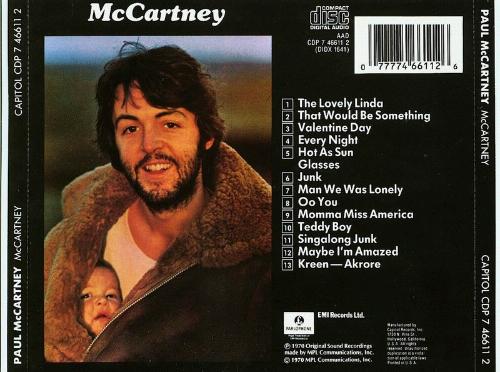
McCartney (1970)


Possibly Paul’s greatest album,  and his first solo , was released in 1970. It is notable for the fact that McCartney, a multi instrumentalist, performed the entire album (all instruments and voices) by himself, except for some backing vocals from his first wife, Linda McCartney. McCartney stated that he played "bass, drums, acoustic guitar, lead guitar, piano, Mellotron, organ, toy xylophone, and bow and arrow" on the album. Notable, also, is the use of a large number of instrumental tracks.

Paul's solo album, simply entitled McCartney, doesn't please the critics because of its simplicity and its under-production. Anyway the album reaches #2 in the charts, right behind Bridge Over Trouble Water by Simon and Garfunkel. And even more, Paul McCartney will soon been awarded with a Golden Record for his solo work.

This first solo album will stay among the favorite ones for many Paul's fans despite the simplicity of the production.

The album starts with The Lovely Linda, which is a short song that was used by Paul to test his four tracks studio.

Then follows That Would Be Something, a nice acoustic ballad backed up by an electric guitar and by some percussions. It really has a countryish style in it. This song will be covered again by Paul 21 years later for the MTV Unplugged program in January 1991. This live cover will be included on Paul's Unplugged album.

Next comes Valentine Day, an instrumental title mostly based on Paul's electric guitar solo. A skilful rendering.

The fourth track is a nice acoustic ballad entitled Every Night.


PAUL McCartney - EVERY NIGHT 1970

It's one of the bests songs on this album. Paul will cover this title many times during his solo career, especially during the 1979' Wings Tour (a live recording can be found on the Concert For The People Of Kampuchea album). It will also be performed as part of the MTV Unplugged program in January 1991.

McCartney album: it's called Hot As Sun and was written by Paul in 1959. At the end of this song, there is some musical link called Glasses which lasts a few seconds and features an excerpt of Suicide, an unreleased song by Paul. Even today the complete Suicide recording can only be found on some bootleg albums.

Then follow Junk which was written by Paul in 1968 during the Indian stay with the Beatles in Maharishi's home in Rishikesn. This is a simple and melancholic ballad played on the acoustic guitar.

Man We Was Lonely is the next track and it brings us some joyful atmosphere. It is a special track as it is the first song ever written together by Paul and Linda.

Oo You comes then as a strong rock song with straight electric guitar lines in the background. It's followed by an instrumental composition, Momma Miss America, in which Paul can exhibit all his skill in playing various instruments and particularly the drums. A good electric guitar solo dominates the second half of the song.

Another nice acoustic ballad follows with Teddy Boy which was rejected from the Beatles' Let It Be album. Like Junk, it was written by Paul in 1968 during the Indian stay with the Beatles in Maharishi's home in Rishikesn.

The next song, Singalong Junk, is an instrumental variation on the theme of the previous Junk composition. It features a beautiful orchestration on piano and acoustic guitar. A newer cover of this instrumental song can be found on Paul's Unplugged album that was recorded during the MTV Unplugged program in 1991.

But the strongest title on this album is definitely Maybe I'm Amazed, a wonderful ballad played on piano and enhanced by an unforgettable electric guitar solo. This tremendous song will remain one the most famous masterpieces composed by Paul.

It will be covered many times by Wings on stage and more recently by Paul and his band during the 89/90' World Tour. Some of these astounding recordings can be found on
Wings Over America and on Tripping The Live Fantastic.

Amazingly, no single will be released from the McCartney album. Clearly Maybe I'm Amazed should have been this missing single. This unfairness will be repaired in April 1977 with the release of the single Maybe I'm Amazed / Soily taken from Wings Over America.

The last title of the McCartney album, Kreen-Akrore is an instrumental and experimental composition with some unusual percussion rhythms and a more classical electric guitar line to end the track.

By far one of the best albums he has ever made and a personal favorite, give it a chance and listen. Link to download will be posted in comments.

Monday, July 13, 2009

Fox News

To depart from my usual music or political blog I must write the following and hope someone will comment and set me straight if I am wrong.

Fox news and especially Hannity is crazy! I have been trying to watch the channel for the last week and can’t understand how people can be so blind and believe everything he says.

Now I have not watched anyone other than Hannity, O’Reilly and Glenn Beck but I’m just appalled at some of the things and people they bring on their shows. Like a guest on Glenn Beck that Obama should bomb us again :


I mean people!!! how stupid can you be this is crazy. And right now I’m watching their reporting on the Sotomayor confirmation hearings; I just don’t know what to think.

Tuesday, July 7, 2009

Iraq pullback and unrest in Honduras

Monday, July 6, 2009

Ousted Ex-President of Hondurans Can Not Land

Saturday, July 4, 2009

Honduras Defends Its Democracy

Fidel Castro and Hillary Clinton object.

Hugo Chávez's coalition-building efforts suffered a setback yesterday when the Honduran military sent its president packing for abusing the nation's constitution.

It seems that President Mel Zelaya miscalculated when he tried to emulate the success of his good friend Hugo in reshaping the Honduran Constitution to his liking.

But Honduras is not out of the Venezuelan woods yet. Yesterday the Central American country was being pressured to restore the authoritarian Mr. Zelaya by the likes of Fidel Castro, Daniel Ortega, Hillary Clinton and, of course, Hugo himself. The Organization of American States, having ignored Mr. Zelaya's abuses, also wants him back in power. It will be a miracle if Honduran patriots can hold their ground.

That Mr. Zelaya acted as if he were above the law, there is no doubt. While Honduran law allows for a constitutional rewrite, the power to open that door does not lie with the president. A constituent assembly can only be called through a national referendum approved by its Congress.

But Mr. Zelaya declared the vote on his own and had Mr. Chávez ship him the necessary ballots from Venezuela. The Supreme Court ruled his referendum unconstitutional, and it instructed the military not to carry out the logistics of the vote as it normally would do.

The top military commander, Gen. Romeo Vásquez Velásquez, told the president that he would have to comply. Mr. Zelaya promptly fired him. The Supreme Court ordered him reinstated. Mr. Zelaya refused.

Calculating that some critical mass of Hondurans would take his side, the president decided he would run the referendum himself. So on Thursday he led a mob that broke into the military installation where the ballots from Venezuela were being stored and then had his supporters distribute them in defiance of the Supreme Court's order.

The attorney general had already made clear that the referendum was illegal, and he further announced that he would prosecute anyone involved in carrying it out. Yesterday, Mr. Zelaya was arrested by the military and is now in exile in Costa Rica.

It remains to be seen what Mr. Zelaya's next move will be. It's not surprising that chavistas throughout the region are claiming that he was victim of a military coup. They want to hide the fact that the military was acting on a court order to defend the rule of law and the constitution, and that the Congress asserted itself for that purpose, too.

Mrs. Clinton has piled on as well. Yesterday she accused Honduras of violating "the precepts of the Interamerican Democratic Charter" and said it "should be condemned by all." Fidel Castro did just that. Mr. Chávez pledged to overthrow the new government.

Honduras is fighting back by strictly following the constitution. The Honduran Congress met in emergency session yesterday and designated its president as the interim executive as stipulated in Honduran law. It also said that presidential elections set for November will go forward. The Supreme Court later said that the military acted on its orders. It also said that when Mr. Zelaya realized that he was going to be prosecuted for his illegal behavior, he agreed to an offer to resign in exchange for safe passage out of the country. Mr. Zelaya denies it.

Watch more iReport videos on AOL Video

Many Hondurans are going to be celebrating Mr. Zelaya's foreign excursion. Street protests against his heavy-handed tactics had already begun last week. On Friday a large number of military reservists took their turn. "We won't go backwards," one sign said. "We want to live in peace, freedom and development."

Besides opposition from the Congress, the Supreme Court, the electoral tribunal and the attorney general, the president had also become persona non grata with the Catholic Church and numerous evangelical church leaders. On Thursday evening his own party in Congress sponsored a resolution to investigate whether he is mentally unfit to remain in office.

For Hondurans who still remember military dictatorship, Mr. Zelaya also has another strike against him: He keeps rotten company. Earlier this month he hosted an OAS general assembly and led the effort, along side OAS Secretary General José Miguel Insulza, to bring Cuba back into the supposedly democratic organization.

The OAS response is no surprise. Former Argentine Ambassador to the U.N. Emilio Cárdenas told me on Saturday that he was concerned that "the OAS under Insulza has not taken seriously the so-called 'democratic charter.' It seems to believe that only military 'coups' can challenge democracy. The truth is that democracy can be challenged from within, as the experiences of Venezuela, Bolivia, Ecuador, Nicaragua, and now Honduras, prove."

A less-kind interpretation of Mr. Insulza's judgment is that he doesn't mind the Chávez-style coup.

The struggle against chavismo has never been about left-right politics. It is about defending the independence of institutions that keep presidents from becoming dictators. This crisis clearly delineates the problem. In failing to come to the aid of checks and balances, Mrs. Clinton and Mr. Insulza expose their true colors.


Wednesday, July 1, 2009

The Cinematic Orchestra - Every day [2002]


An old music-press adage claims that second albums are notoriously "difficult." If this were true, then Every Day should be one big disappointment. The fact that it's arguably one of 2002's finest jazz albums ( yes, jazz--as in real, old-fashioned, clarinets-and-trumpets jazz ) proves how talented Jason Swinscoe's Cinematic Orchestra are. Following up their impeccable debut, Motion, was going to be tough, but they've surpassed themselves here. While the former was a fusion of sample-culture smoky, backroom jazz, Every Day is jazz pure and simple--old jazz for the nu-jazz generation. "Man with the Movie Camera," "Burnout," and "Flite" are near-perfect soundtrack jazz pieces: epic, shuffling, ever shifting. "All That You Give" and "Evolution" highlight the enchanting vocals of legendary soul singer Fontella Bass. Best of all, though, is the Roots Manuva collaboration "All Things to All Men"--proof that jazz and rap aren't as strange bedfellows as some may think.

With Every Day, Cinematic Orchestra move beyond the electro-jazz fusion of their debut to make a record more natural, more paced, and, surprisingly, better than the justly hyped Motion. J Swinscoe is more the arranger/conductor here than the producer, but of course, there's little need for samples or effects with such an accomplished band sharing the burden. For the opener "All That You Give," Swinscoe and Co., plus harp player Rhodri Davies, spend a few minutes delicately paving the way for a deeply felt vocal by soul hero Fontella Bass. "Burn Out" is a lush, meditative track with a pleasantly ambling solo from Phil France on electric piano, a few appropriately cinematic-sounding horns, an age-old vocal sample, and occasional creaking static phasing through. Bass returns for another splendid track ( "Evolution" ), and the mighty Roots Manuva appears on a magisterial, spoken-word quasi-autobiography, "All Things to All Men." Except for a pair of detours into highly programmed "broken beat" production, Every Day is a textured, acoustic work; Cinematic Orchestra take their time setting up these songs -- of the seven tracks, four last over nine minutes. The sounds and styles heard may not be revolutionary, but instead of simply pushing stylistic boundaries, Cinematic Orchestra display a real gift in making emotional, artistic music.


Personnel:
Jason Swincoe (Arranger and Sampling)
Patrick Carpenter (Turntables and Electronics)
Milo Fell (Percussion)
Luke Flowers (Drums)
Phil France (Double Bass, Bass Guitar and Electric Piano)
John Ellis (Keyboards)
Roots Manuva (Spoken Words) - 6
Fontella Bass (Vocals) - 1,4

Tuesday, June 16, 2009

Cordillera Nicaragüense

-

Solace


Röyksopp - Melody A.M [2001]

In case any of you guys don't watch TV here is a treat.

Lets backtrack to 2006. GEICO was comming out with its catchy new star, The Caveman, well listen to this commercial titled "At The Air Port":


You are listening to Remind Me by Röyksopp released as their fourth single.

Melody A.M. is the debut album of Norwegian duo Röyksopp. Songs from this album have been used in television adverts and computer games"Eple" was licensed by Apple and used as the introduction music for the Mac OS X v10.3 Setup Assistant A remix of "Poor Leno" was featured in the SSX 3 soundtrack.

So if your interested listen and if you like it buy it.

For testing purposes the following link will take you to it.

Enjoy

Monday, June 15, 2009

“Left versus right” labels should be left aside in Latin America

The wittiest of the Marxes (Groucho, not Karl) said famously, “I wouldn’t join a club that would have me as a member.” It is an often-used quote that fits well with news about Cuba coming from a meeting this week of the Organization of American States in San Pedro Sula, Honduras.

Hillary Rodham Clinton faced a harangue from OAS members demanding that Cuba be invited to become a member of the organization. A New York Times piece about the meeting said this:

"On one level, it seems a sterile debate: Cuba has said often and loudly that it does not want to rejoin the organization. But on a deeper level, the meeting has showcased Latin America’s resurgent political left, which has seized on Cuba as an issue with which to press the United States."

How much does this involve the misapplication of those overused words, “left versus right?” It can also be argued that all of Latin America yearns for a different relationship with the United States under the new presidency of Barack Obama. Cuba has diplomatic and trade ties with something like 170 countries around the world — left, center and right.

Back in Washington, the dominant move for a change in stagnant and stymied Cuban relations comes from the offices of Republican Senator Richard G. Lugar of Indiana, who only Rush Limbaugh might try to label as a leftist. Lugar doesn’t support OAS membership for Cuba, but he calls for rethinking U.S. relations with Cuba.

The OAS is a sideshow compared with appeals from Lugar and others, including U.S. businesses looking to open Cuba as a lucrative new market. Meanwhile, a majority of Americans and even a majority of the Cuban-American community in the United States support an end to the 47-year-old U.S. trade embargo of Cuba.

So whether or not Cuba is invited to join the OAS, the focus is on Washington: How quickly and to what extent will the Obama administration promote the changes that appear close at hand?

- Peter Eisner

100 New Nuclear Reactors

Shinichi Maruyama


Shinichi Maruyama started his professional career in Tokyo in 1993, 10 years later relocating his studio to New York City in search of more global opportunities. Specializing in splashing and energetic movements within shots Maruyama has become highly sought after for his expertise in this field expanding his career into Europe in 2005.


Shinichi Maruyama was born in 1968 in Nagano, Japan. Surrounded by beautiful mountains, in High School he became immersed in mountain climbing, and wanting to preserve the stunning landscapes began taking photographs.


http://www.stinkytofu.org/wp-content/uploads/2009/04/shinichi-maruyama-1.jpg


Upon graduating college he joined Ima Co. assisting their 15 still life photographers where he discovered the many different professional facets of creating an image. In 1993, working with an 8x10 camera Maruyama became independent winning the ’99 Japan Magazine Advertisement Prize planning-advertisement section award.


He began taking photos for his personal project “Into the Spiti Valley”, a documentary work about Tibetan culture in India, the exhibition later opened in 2001 along with the publication of two books “Into The Spiti Valley” and “Spiti” In 1998, he joined Hakuhodo Photo Creative and became involved in advertising campaigns for Japanese companies winning the New York ADC Gold Award for an advertising campaign for a satellite broadcasting company.


water profusion by shinichi maruyama03 Water Profusion By Shinichi Maruyama


In 1999 realizing the possibilities of digital photography and Photoshop Maruyama began creating his work using digital cameras. Maruyama has been involved in many worldwide advertising campaigns utilizing his expertise in ice, liquid/splash, and specializing in movement in his works. Years of lighting research and the advances in retouching have made it easy to have a strong idea of exactly how a photo will look even before the shoot begins, but in photographing liquid and subjects in movement, it is impossible to foresee what the end result will be, and it is this spontaneity that enables Maruyama to have more fun creating his work.


While Maruyama enjoys the excitement of collaborating with creators from around the world, one thing is always on his mind, that feeling he had back in high school, when he was photographing whatever he wanted to...he is now working on his personal projects and aims to have an exhibition of this work.

Sunday, June 14, 2009

Zero 7 - Simple Things [2001]


Country: UK

Genre: Downtempo, Future Jazz, Trip Hop

It's a soulful mix of soul, jazz and electro. The vocals are great (although personally I'm not particularly fond of Sia Furler at certain moments) and the arrangements are right on the money for this type of "retro-techno" sound. I sometimes get confused if it's a smooth jazz combo trying to be electronic or an electronic group trying to be smooth jazz. In The Waiting Line and I Have Seen are the best ones I suggest you begin with those.

Song List :

1 I Have Seen (5:07) Vocals - Mozez

2 Polaris (4:48)
3 Destiny (5:37) Vocals - Sia Furler* , Sophie Barker
4 Give It Away (5:17)
5 Simple Things (4:24) Vocals - Mozez
6 Red Dust (5:40)
7 Distractions (5:16) Vocals - Sia Furler*
8 In The Waiting Line (4:32) Vocals - Sophie Barker
9 Out Of Town (4:47)
10 This World (5:35) Vocals - Mozez
11 Likufanele (6:11)
12 End Theme (3:39)
13 Salt Water Sound (5:30)
14 Spinning (6:03) Vocals - Sophie Barker
Download

free counters